
In the world of contemporary visual design, texture has emerged as a pivotal element that transcends mere surface decoration. It is a bridge between the abstract concepts of color, shape, and line and the tactile sensibilities that viewers unconsciously tap into when they encounter a composition. Texture can be seen, felt, or imagined, and its ability to add depth, hierarchy, and emotional resonance makes it indispensable for designers seeking to create memorable, engaging work. This article explores how texture functions in modern design, the techniques employed to craft it, and its evolving role across media and disciplines.
Defining Texture in Visual Language
Texture in graphic and visual arts refers to the perceived or actual surface quality of an object. It is conveyed through patterns, gradients, and shading that suggest roughness, smoothness, graininess, or other tactile qualities. Unlike color, which communicates via hue and value, texture speaks through visual cues that mimic the way light interacts with real-world surfaces. When designers intentionally layer textures, they generate a visual third dimension, even within two-dimensional media, thereby inviting viewers to “feel” the piece beyond what the eye can literally see.
Texture’s Psychological Impact
Human perception is attuned to texture because it signals information about materiality, temperature, and context. Studies in visual cognition show that textures can influence mood: warm, coarse textures often evoke comfort or nostalgia, while cool, smooth textures suggest modernity or sterility. By manipulating texture, designers can therefore guide the emotional response to a brand, product, or narrative. In user interfaces, subtle micro-textures help users locate buttons and controls, improving usability without cluttering the visual hierarchy.
“Texture is the invisible layer that tells the story of a design’s substance.” – Design Research Journal
Traditional Techniques for Creating Texture
Historically, texture was rendered through manual media. Artists would sketch, paint, or carve with tools that left distinct marks: the stippling of a charcoal drawing, the impasto of oil paint, or the weave of a linen backdrop. These methods required a deep understanding of how light reflects off different surfaces, and they imparted a physical authenticity to the work. Even as digital tools gained prominence, many designers continue to use these techniques as a foundation, blending them with new technologies to achieve richer results.
- Stippling and hatching for fine detail.
- Brushwork variations to simulate fabric or fur.
- Layering washes in watercolor to create atmospheric depth.
- Textured printing inks for tactile brochures.
Digital Texturing: A New Frontier
With the advent of powerful graphic software and 3D modeling, designers can now generate texture through computational means. Digital textures can range from photorealistic grain maps to abstract patterns, all manipulable through layers, masks, and filters. This flexibility allows for rapid iteration and precise control over scale, opacity, and blending modes. Moreover, the integration of procedural texture generators enables designers to create complex, non-repeating patterns that evolve in real-time, offering endless possibilities for interactive media and immersive experiences.
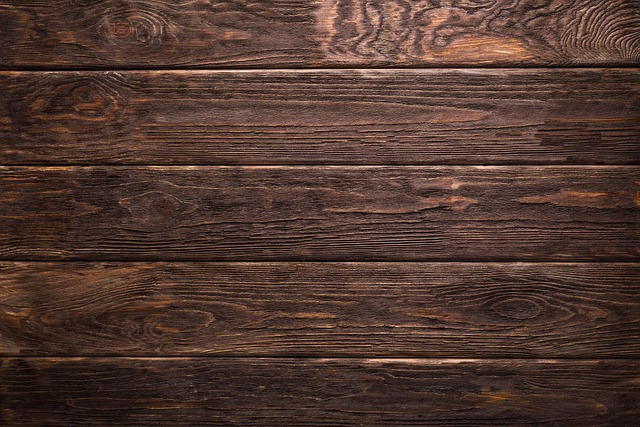
- Photographic texture maps: high-resolution photos of wood, metal, or stone that are mapped onto virtual surfaces.
- Procedural noise algorithms: Perlin or Simplex noise used to generate seamless, organic patterns.
- Shader programming: real-time surface simulations that respond to lighting and camera movement.
- Vectorized pattern creation: scalable, resolution-independent textures ideal for print and web.
Texture in Branding and Identity
Brands often employ texture to convey values and create distinct visual identities. A luxury fashion house might integrate the subtle weave of silk into its digital lookbook, while a tech startup could use a smooth, metallic sheen to suggest innovation. Texture can differentiate a brand in crowded markets, offering a sensory cue that lingers in the consumer’s memory. When aligned with brand storytelling, texture becomes more than decoration; it becomes a narrative device that echoes the brand’s core essence.
Case Study: Minimalist Design Meets Texture
Consider a minimalist poster series that employs a single color palette but varies the underlying texture to differentiate each piece. By overlaying a matte paper grain onto one composition and a glossy satin finish onto another, the designer signals distinct moods while maintaining visual cohesion. The contrast is subtle yet potent, demonstrating how texture can add dimensionality without sacrificing the simplicity that defines the brand’s aesthetic. This approach is widely adopted in editorial design, where texture enhances readability and invites readers into the narrative.
Texture in Motion and Interactive Design
Motion graphics harness texture to animate surface interactions. Parallax scrolling, for example, leverages layered textures to create depth as the viewer’s viewpoint shifts. Hover effects in web interfaces often incorporate micro-texture changes—softening edges or adding subtle embossing—to signal interactivity. In gaming, textures are crucial for realism; a realistic stone wall texture can bring immersion to a virtual world. These applications illustrate texture’s versatility across static and dynamic contexts.
Future Trends: AI-Generated Texture and Beyond
Artificial intelligence is beginning to transform texture creation. Generative adversarial networks (GANs) can produce textures that mimic natural materials with uncanny accuracy. Designers can input a mood or concept, and AI will generate thousands of texture variations, expediting the creative process. Another emerging trend is the integration of haptic feedback in VR and AR, allowing users to “feel” virtual textures through tactile devices. This convergence of visual and physical perception promises a new era where texture not only looks real but also feels real.
Ethical Considerations in Texture Use
While texture enhances visual communication, designers must be mindful of cultural sensitivities. Certain textures may carry symbolic meanings in specific societies—textures reminiscent of particular fabrics, for example, could be associated with heritage or social status. Misuse can inadvertently lead to cultural appropriation or misrepresentation. Ethical design requires research and collaboration with communities to ensure texture choices respect cultural contexts and contribute positively to the narrative.
Conclusion: Texture as a Multisensory Dialogue
Texture has evolved from a decorative flourish to a sophisticated language in contemporary visual design. By simulating the tactile world, it bridges the gap between perception and emotion, adding depth and nuance to compositions across print, web, and immersive media. As technology advances—particularly in AI and haptic integration—texture will continue to deepen its influence, offering designers unprecedented tools to craft experiences that feel as compelling as they look. Mastery of texture therefore remains a vital skill for anyone aspiring to produce work that resonates on multiple sensory levels.